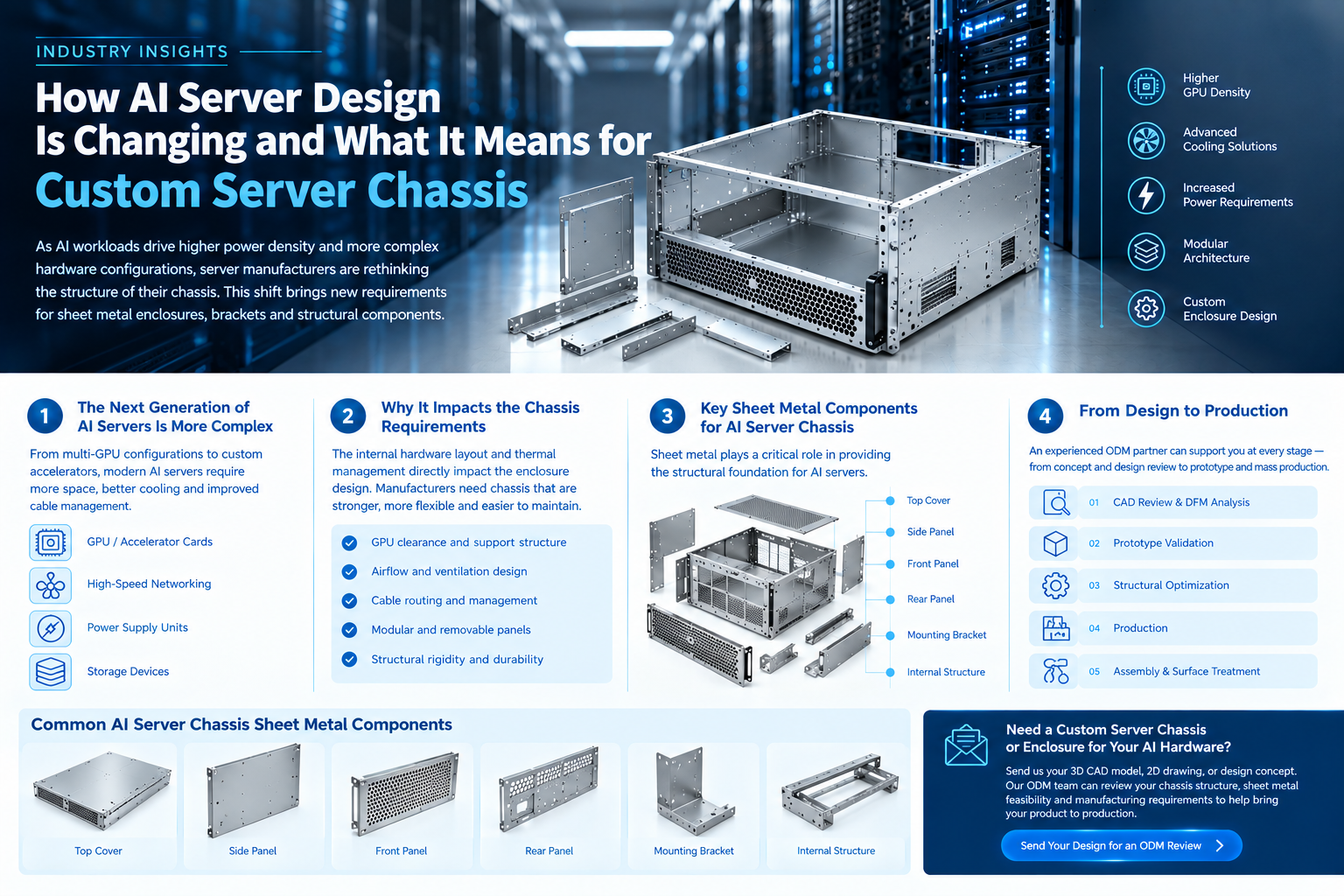
2026-09-11 AI computing is changing the design requirements of server hardware. As AI workloads increasingly rely on GPUs, custom accelerators and high-density computing architectures, server manufacturers are developing systems that differ from traditional rack servers. Recent developments from companies such as d-Matrix and Cerebras highlight the move toward more specialized AI hardware and modular server architectures. For equipment manufacturers, this shift creates new requirements for server chassis design, including internal component layout, GPU clearance, airflow, cable routing, service access and structural rigidity. A well-designed sheet metal chassis can support these requirements while allowing manufacturers to move efficiently from prototype development to volume production.
Read More 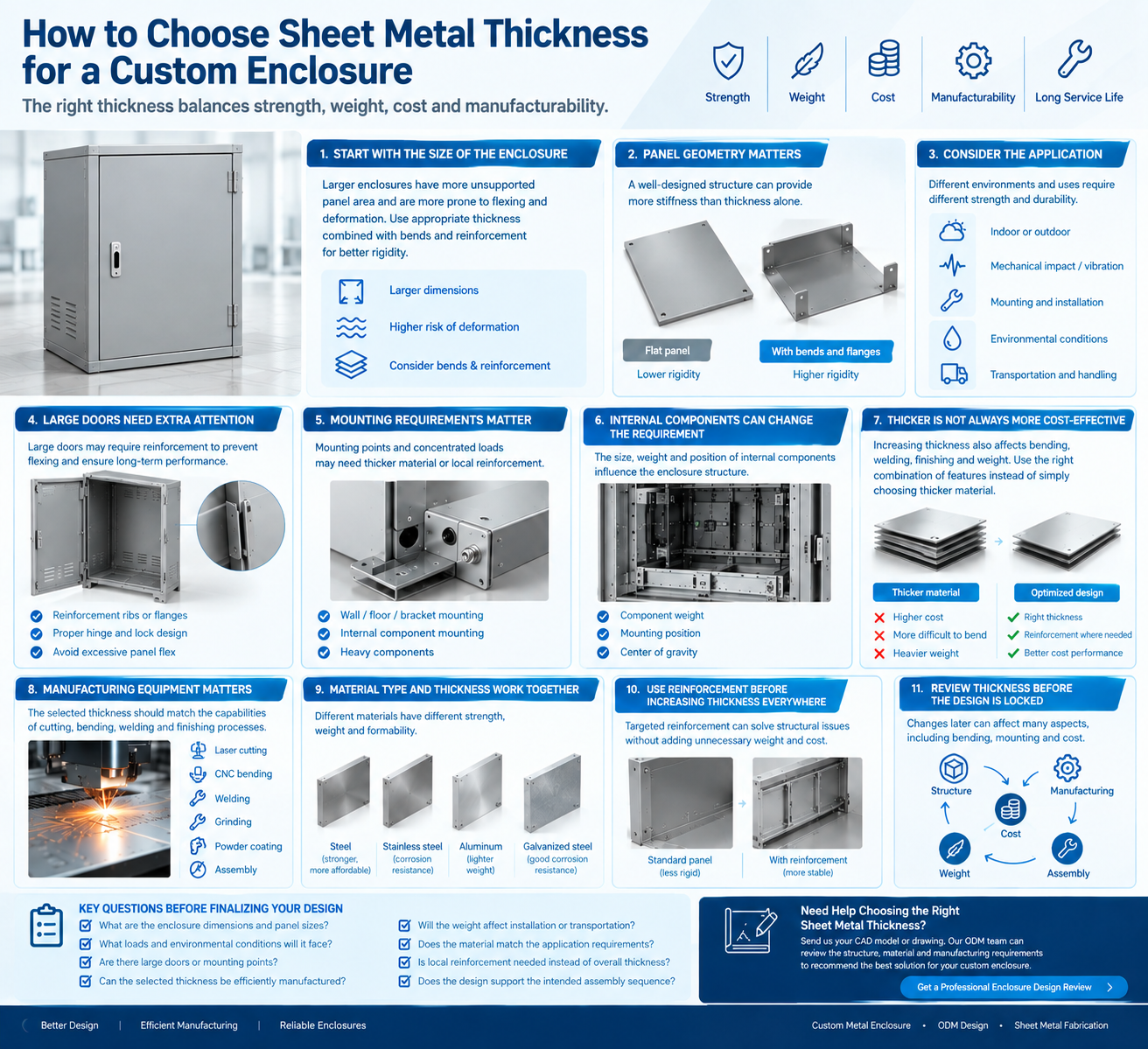
2026-09-10 Choosing the right sheet metal thickness is an important part of custom enclosure development. A panel that is too thin may lack rigidity, while excessive thickness can increase weight, material cost, bending difficulty, and overall production cost. The appropriate thickness depends on enclosure size, panel geometry, mounting method, structural support, door dimensions, environmental conditions, and manufacturing requirements. This guide explains the key factors engineers and product developers should consider when selecting sheet metal thickness for custom metal enclosures.
Read More 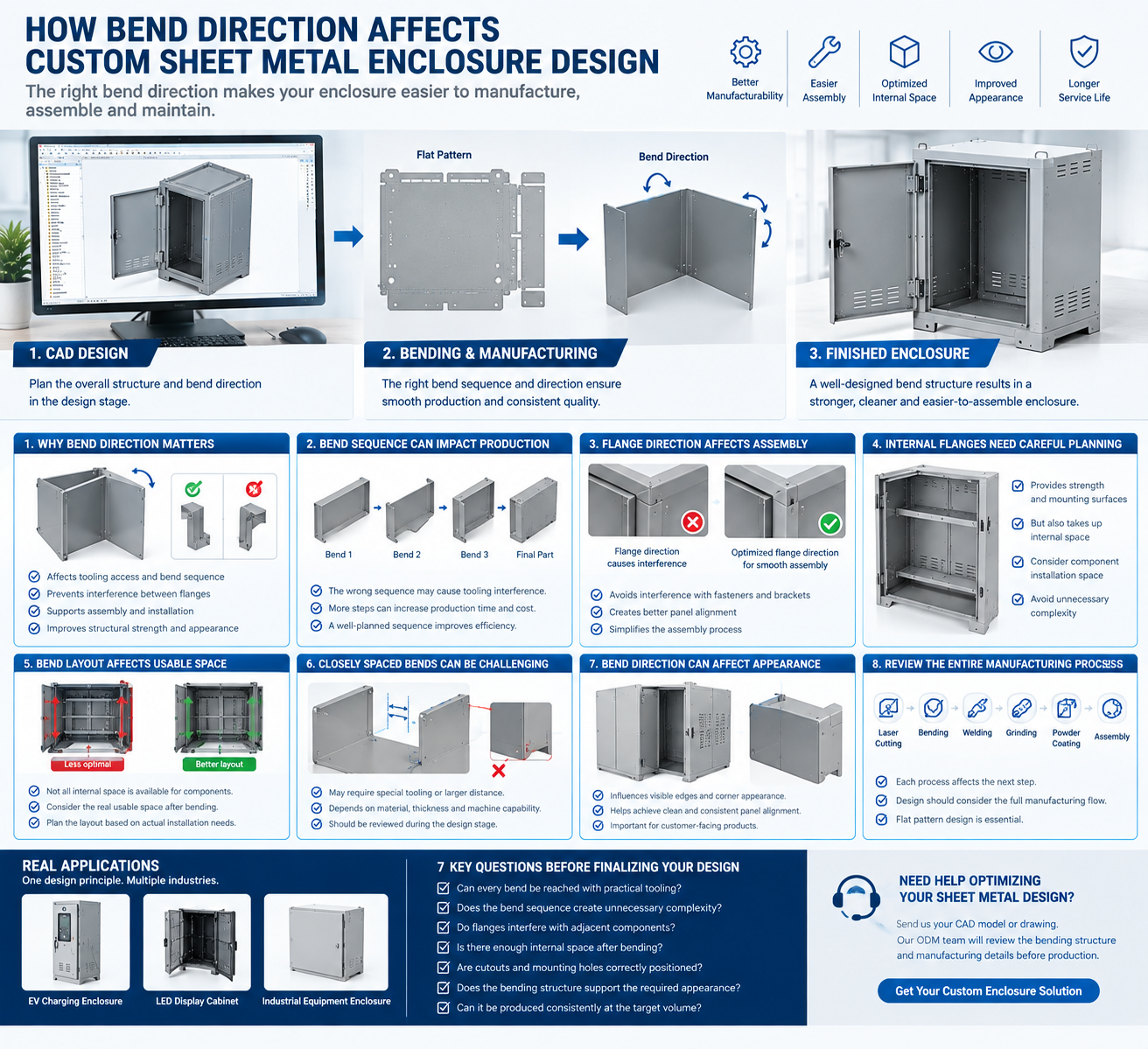
2026-09-09 The direction and arrangement of bends can have a significant effect on a custom sheet metal enclosure. Poorly planned bends may create assembly interference, difficult tooling access, inconsistent appearance, or unnecessary manufacturing complexity. Understanding bend direction during the design stage helps engineers create enclosure structures that are easier to manufacture, assemble, and scale into production.
Read More 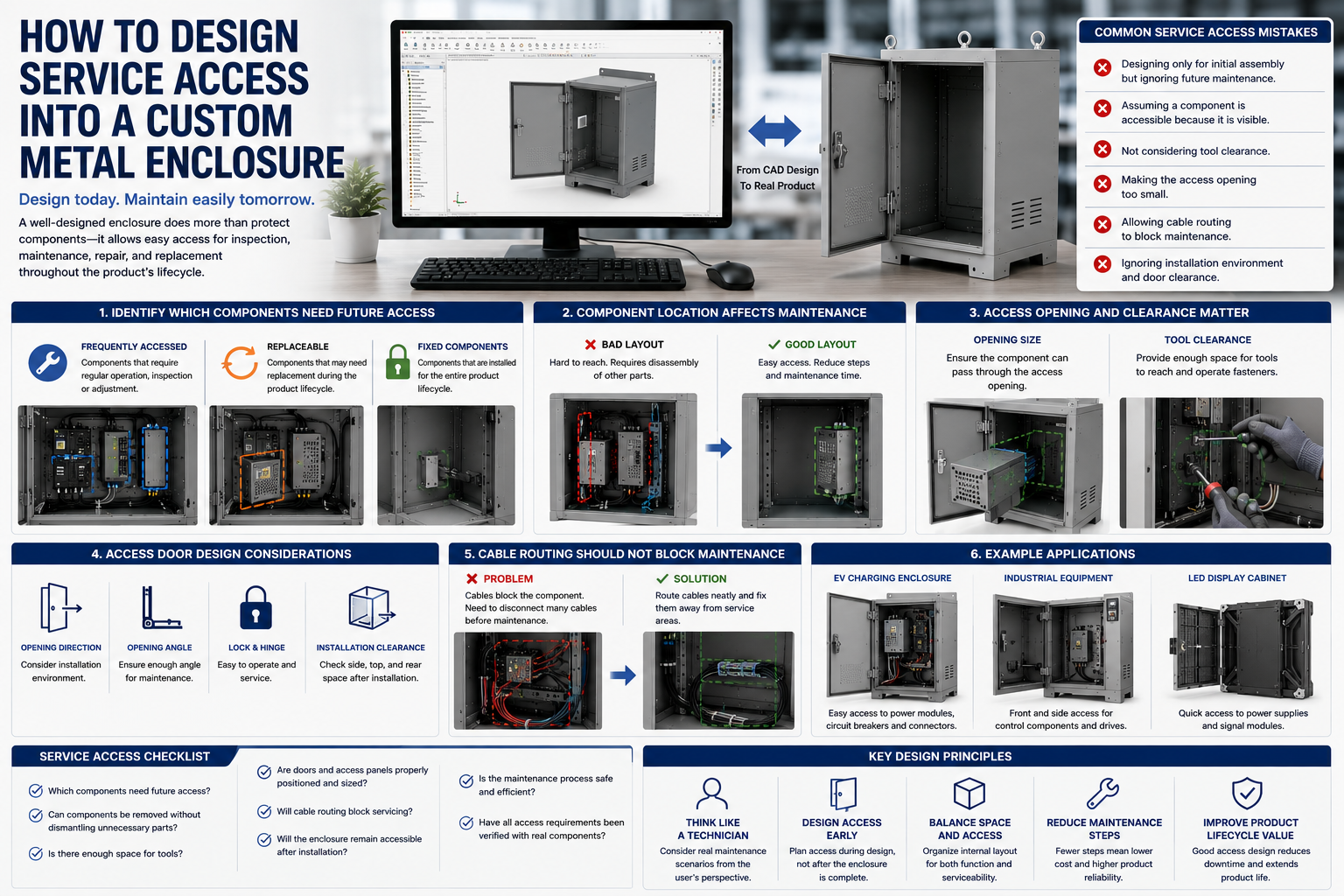
2026-08-31 A successful metal enclosure should not only protect internal components but also allow practical maintenance throughout the product's lifecycle. This guide explains how buyers can design service doors, access panels, component locations, and maintenance space into custom sheet metal enclosures before production begins.
Read More 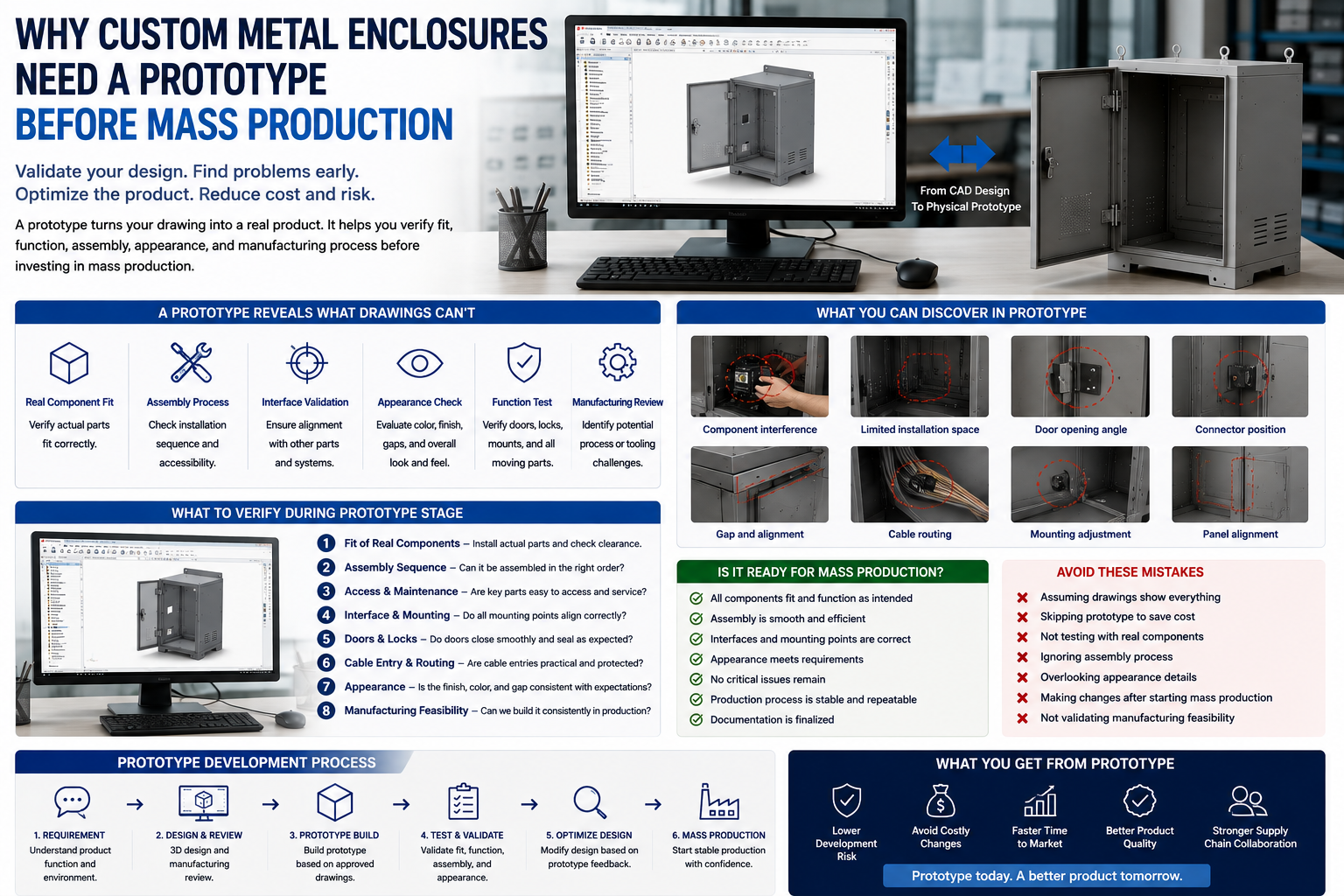
2026-08-26 A finished CAD drawing does not always reveal how a custom metal enclosure will perform as a real product. Prototype production allows engineering teams to verify fit, assembly, appearance, interfaces, and manufacturing details before committing to larger quantities. This guide explains what buyers should evaluate during the prototype stage and when a design is ready to move toward mass production.
Read More 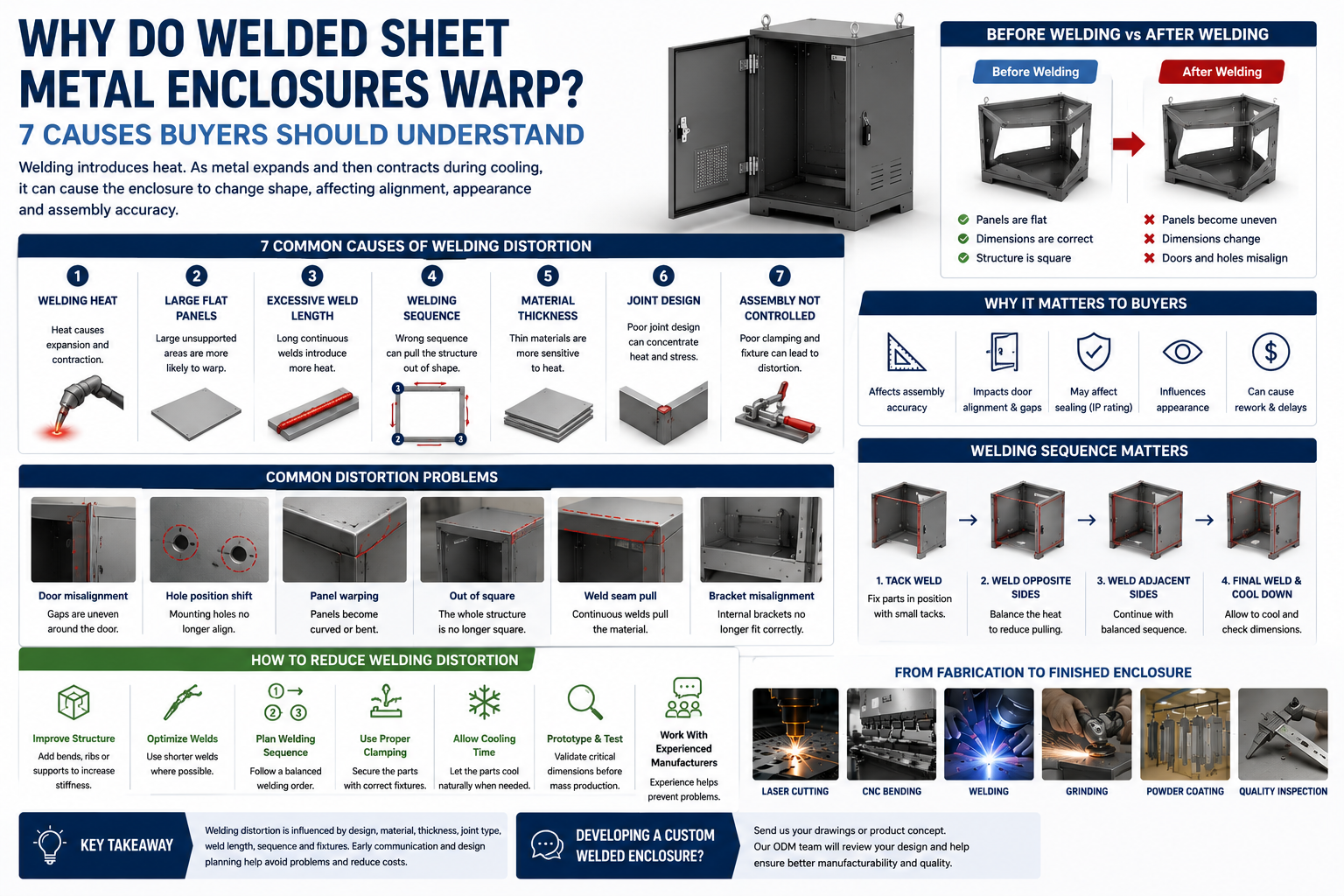
2026-08-24 Welding can change the shape of a sheet metal enclosure even when every individual panel is manufactured correctly. Heat distribution, weld sequence, material thickness, joint design, and structural reinforcement can all affect the final result. Understanding these factors before production helps buyers reduce deformation, improve assembly accuracy, and avoid costly rework during prototype and mass production.
Read More 


